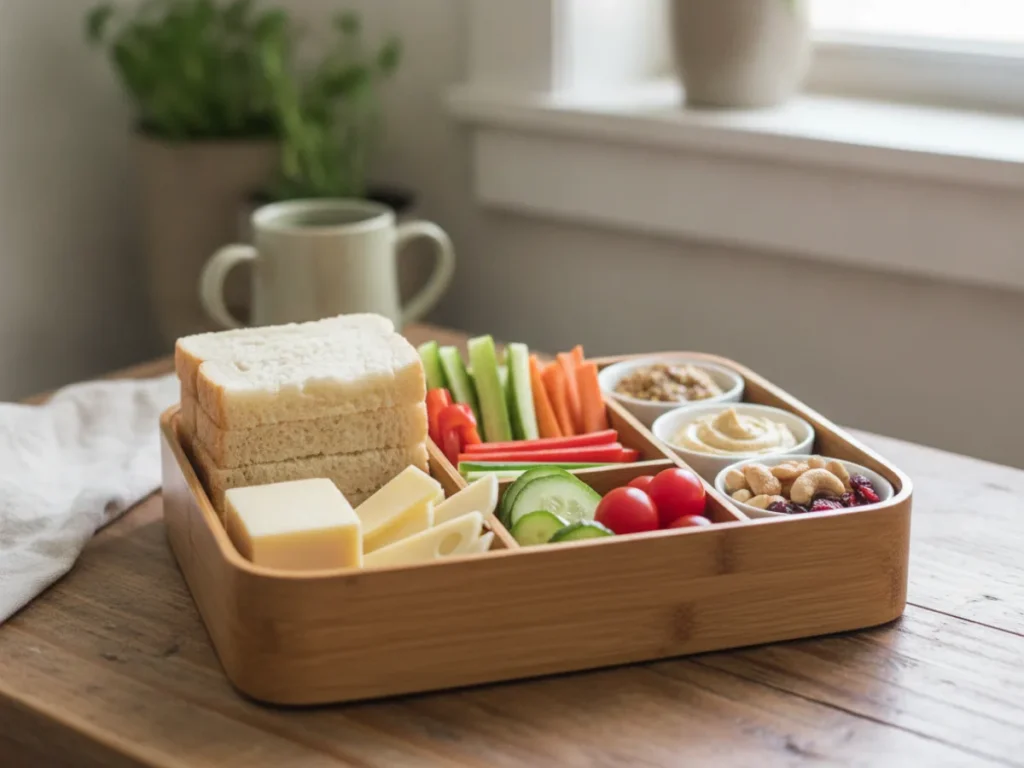
Deconstructed Sandwich Box for Picky Eaters
A deconstructed sandwich box keeps familiar ingredients separate so a child can choose how—or whether—to combine them. It can be useful for children who prefer predictable textures, but it is a practical packing format rather than medical or feeding-therapy advice. Adapt the box to individual dietary needs, professional advice where applicable and your school’s allergy policy.
What to include in a deconstructed sandwich box
- A bread component, such as small bread squares, a mini roll, pitta strips or plain crackers
- A familiar filling, such as cheese, suitable cooked chicken or another family-approved option
- One or two accepted vegetables
- A manageable fruit portion
- An optional dip in a leak-resistant container
There is no requirement to fill every compartment. Start with a quantity your child normally manages and add variety gradually.
How to assemble the box
- Choose a clean lunchbox with separate compartments or add small reusable cups.
- Place bread or crackers away from wet fruit, vegetables and dips.
- Cut foods into age-appropriate pieces. Consider choking guidance for the child’s age and development.
- Add at least one familiar food and keep any less familiar item to a small, low-pressure portion.
- Close the lid and check that the compartments seal as intended without crushing the food.
- Refrigerate promptly if the box contains chilled ingredients.
A practical approach for selective eaters
Keeping foods visible and separate can make the lunch more predictable, but no format guarantees that a child will eat a particular item. Avoid pressure and describe the food neutrally. If eating difficulties affect growth, health or family life, seek advice from an appropriately qualified professional.
The guide to kids bento lunch boxes can help you assess compartment size and easy-open designs. For a wider planning framework, see easy school lunch ideas for busy parents.
Four flexible box combinations
Cheese and cracker box
Pack cheese pieces, crackers, cucumber and fruit in separate sections. Keep chilled and check labels for allergens.
Chicken sandwich-parts box
Add bread pieces, suitably stored cooked chicken, grated carrot and a permitted spread in separate compartments.
Pinwheel-parts box
Pack tortilla strips, cheese and a familiar filling separately. If combined wraps are accepted later, try the turkey and cheese pinwheels guide.
Vegetarian snack box
Use pitta strips, cheese or another suitable protein, accepted vegetables and fruit. Check whether dips containing sesame or other allergens are permitted.
Packing and chilled-food guidance
Keep cheese, cooked meat, dips and other chilled ingredients refrigerated until packing. Use an insulated lunch bag and an ice pack where appropriate, and follow product-label and current food-safety guidance. The insulated lunch bags guide explains useful features, but an insulated bag does not replace safe preparation and refrigeration.
Frequently asked questions
What is a deconstructed sandwich?
It is a sandwich served as separate components—such as bread, cheese, a filling and vegetables—rather than assembled before packing.
Does a deconstructed lunch help every picky eater?
No. Preferences and sensory needs vary, and no lunch format guarantees acceptance. Use familiar foods, modest portions and professional advice where needed.
How do I stop crackers becoming soggy?
Place dry foods in a separate sealed compartment and keep wet fruit, vegetables and dips away from them.
How many foods should I include?
Use a manageable number based on your child’s appetite and routine. A familiar main component, fruit or vegetable and drink can be a practical starting point.
Next step: Review the bento lunch box guide to choose a layout that keeps each component separate and easy to reach.

2 Comments
Comments are closed.