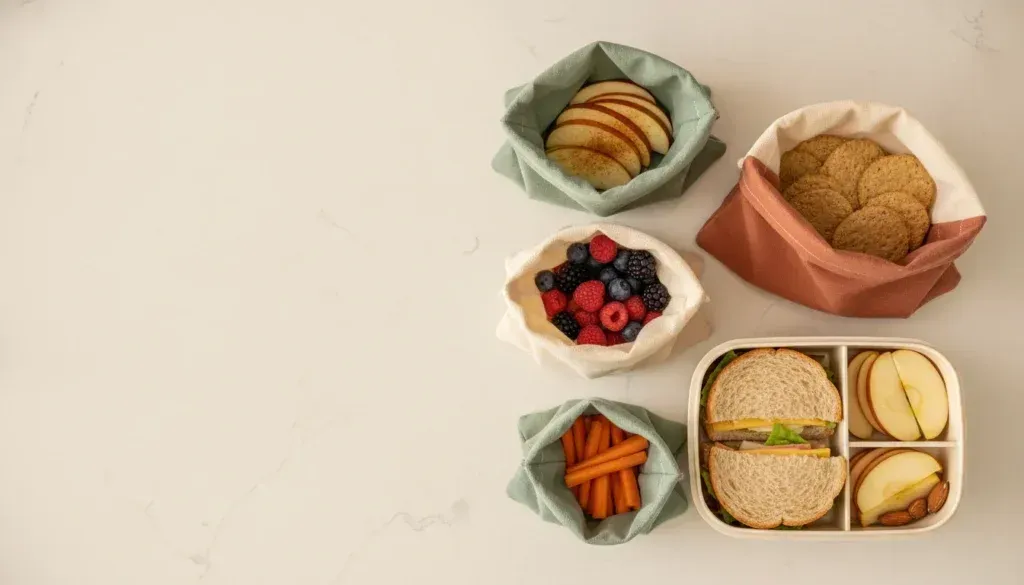
Smart snack storage for busy families
Reusable Snack Bags for School Lunches: Sizes, Materials & Care
Compare reusable snack bags for fruit, crackers, sandwiches and freezer prep. Learn how silicone, fabric and lightweight reusable formats differ, how to clean them, and which type fits your family routine.
- Reusable every day
- Easy to clean
- Built for busy lunch routines
Why they work
A Simple Upgrade for Everyday Lunch Packing
Reusable snack bags can make small lunch items easier to organise without turning the morning routine into another complicated system. Choose a format that suits the food you pack, the way you clean up and the space available in your lunch bag.
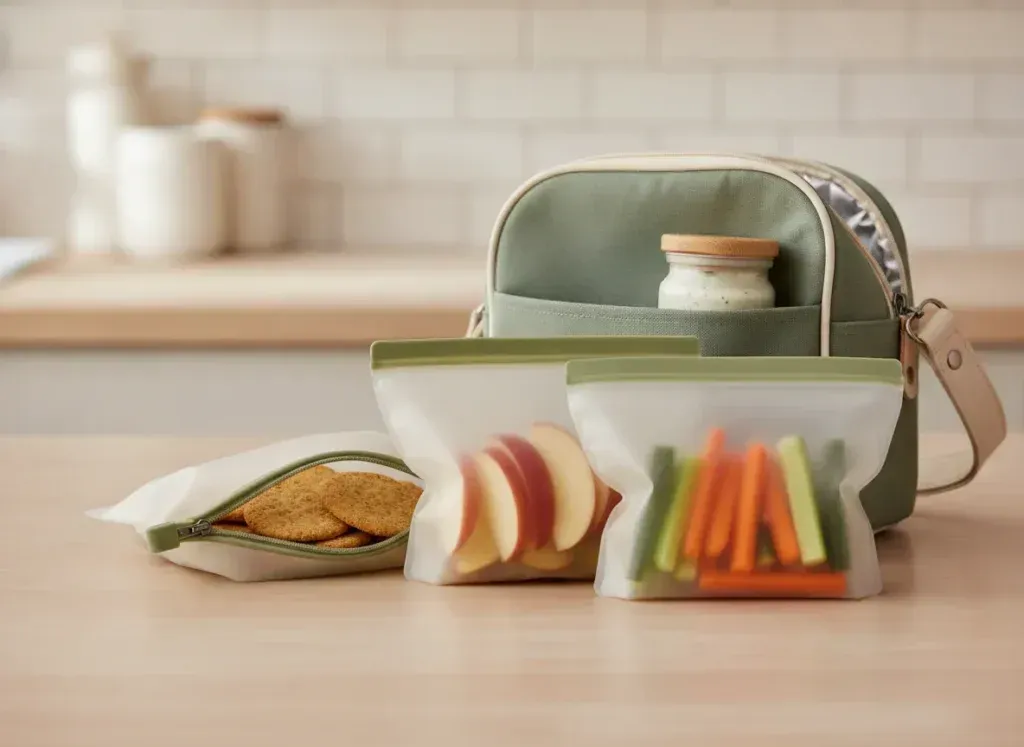
Keep Snacks Organised
Match the bag size to the portion so crackers, fruit, vegetables and sandwiches stay separated and easier to find. A secure closure also helps keep loose food contained inside the lunch bag.
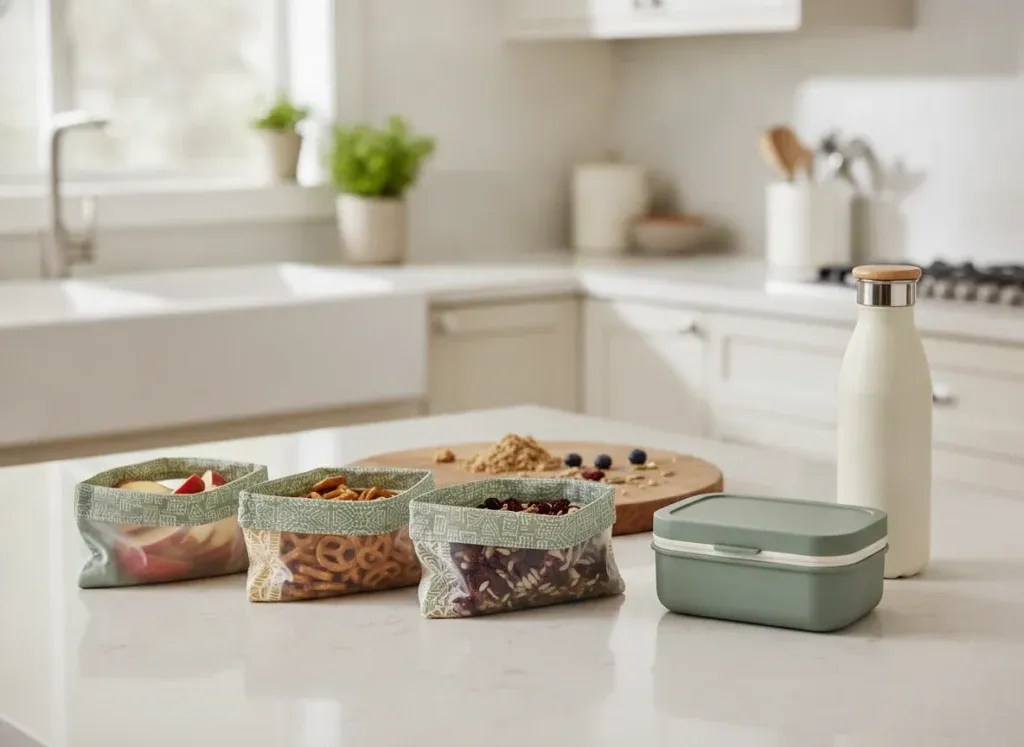
Pack Faster
Pre-portion a few familiar snacks during weekly prep, then add them to a bento box or lunch bag when needed. A small repeatable system can reduce decisions on rushed school mornings.
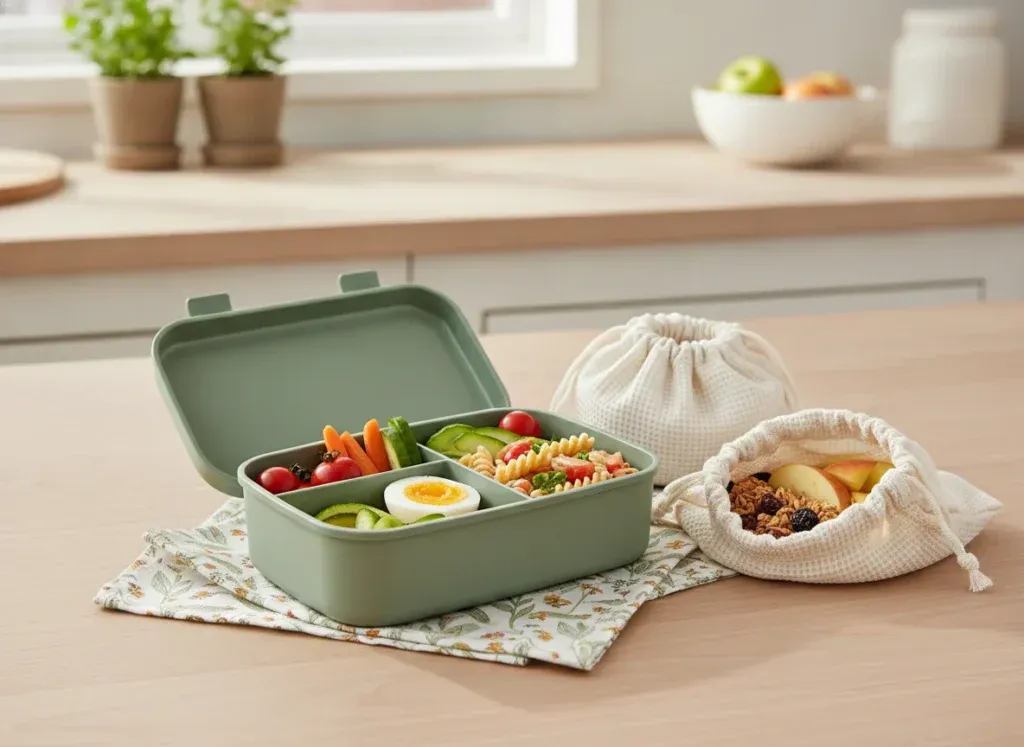
Use Fewer Disposable Bags
A washable set can replace some single-use bags in the family routine. The practical benefit comes from choosing bags you will actually wash, dry and reuse consistently.
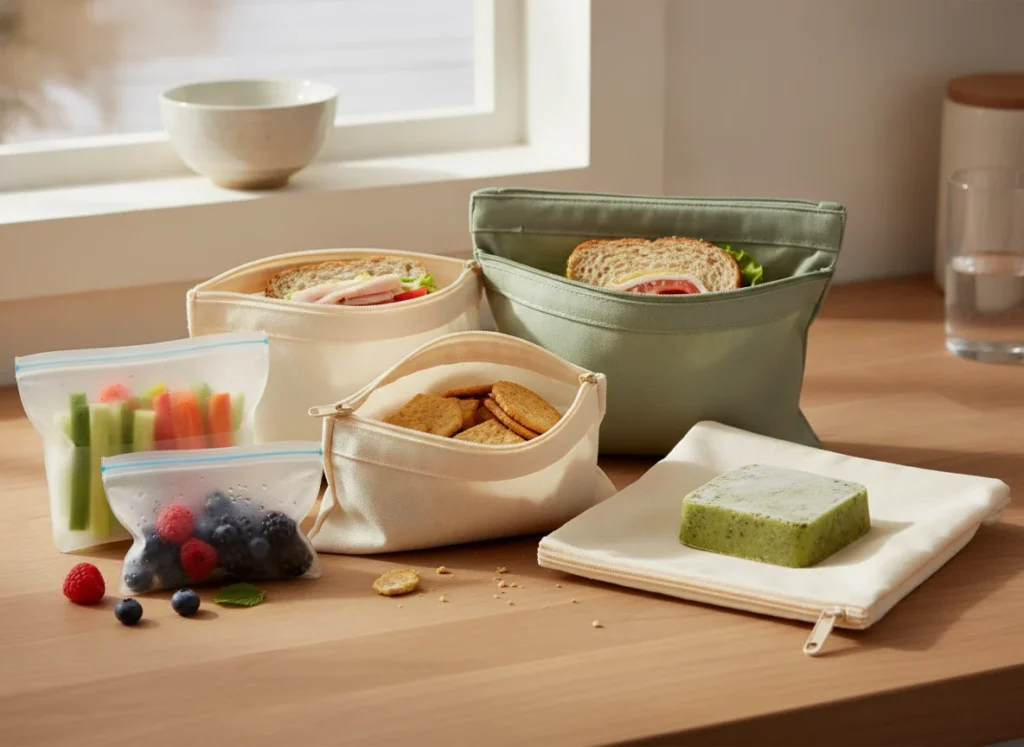
Choose by use
Start With What You Pack Most Often
There is no single format for every family. Begin with the foods that appear most often, then choose the size, shape and closure that make those foods easy to pack and clean up.
School Snacks
Small bags suit crackers, dry cereal, cheese portions or bite-size snacks.
Sandwiches & Wraps
Look for a wider opening and enough depth to avoid compressing the food.
Fruit & Vegetables
Choose a format that is easy to rinse and dry after moist foods.
Freezer Prep
Use only bags whose current manufacturer guidance specifically permits freezing.
Mixed Family Sets
A few sizes can cover children, adults, day trips and weekly meal preparation.
Quick decision guide
Choose by Material, Format & Care Routine
Use this as a practical starting point rather than a product guarantee. Construction, lining, closure and care instructions vary between products, so check the current manufacturer guidance before using a bag in a dishwasher, microwave or freezer.
| Format | Often suits | Cleaning routine | Practical strengths | Watch-outs |
|---|---|---|---|---|
| Silicone | Moist snacks, fruit, vegetables and flexible food storage | Usually rinsed or washed after use; follow the product instructions for heat and dishwasher use | Flexible, structured enough for repeated use and available in several shapes | Can be heavier or bulkier; closures and drying time differ by design |
| Fabric with food-safe lining | Dry snacks, sandwiches and lightweight school packing | Wipe or wash according to the lining and seam instructions, then dry completely | Lightweight, foldable and easy to fit around other lunch gear | Not every lining suits wet foods; seams may need extra attention when cleaning |
| Lightweight reusable or PEVA-style | Mixed sets, portioning and space-saving family storage | Often hand-washed and air-dried; confirm the exact care guidance | Thin, easy to store and commonly sold in multiple sizes | Material quality and closure durability vary; replace damaged or worn bags |
Fast choice: prioritise easy cleaning for moist foods, a wide opening for sandwiches and a lightweight format when the lunch bag is already full.
Complete lunchbox system
Make Every Piece Work Together
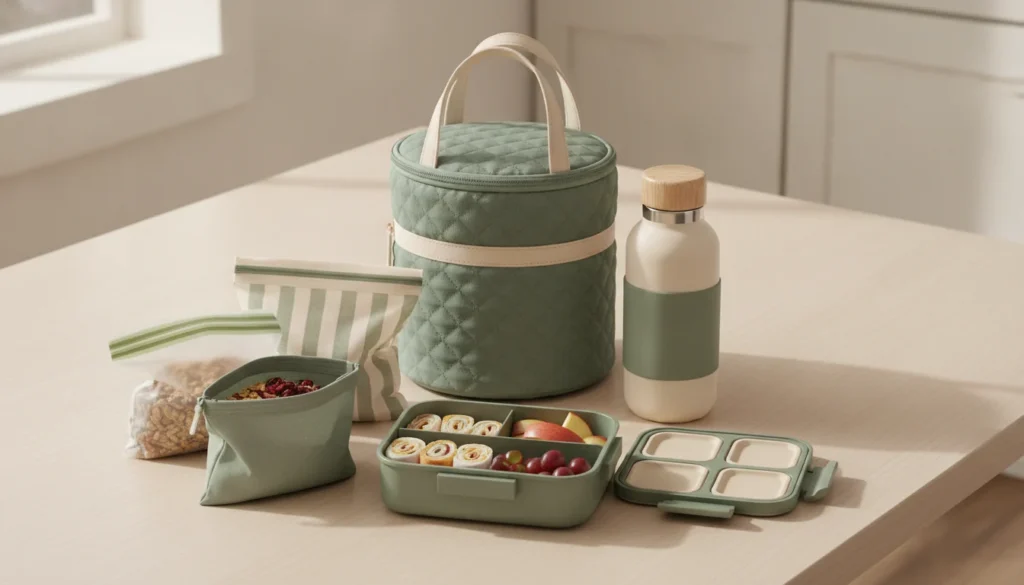
A snack bag works best as one part of a practical kit. Check that the sizes fit together, the lunch bag closes comfortably and the bottle can travel without pressing against softer food.
Featured Guide
Build a Lower-Waste School Lunch Routine
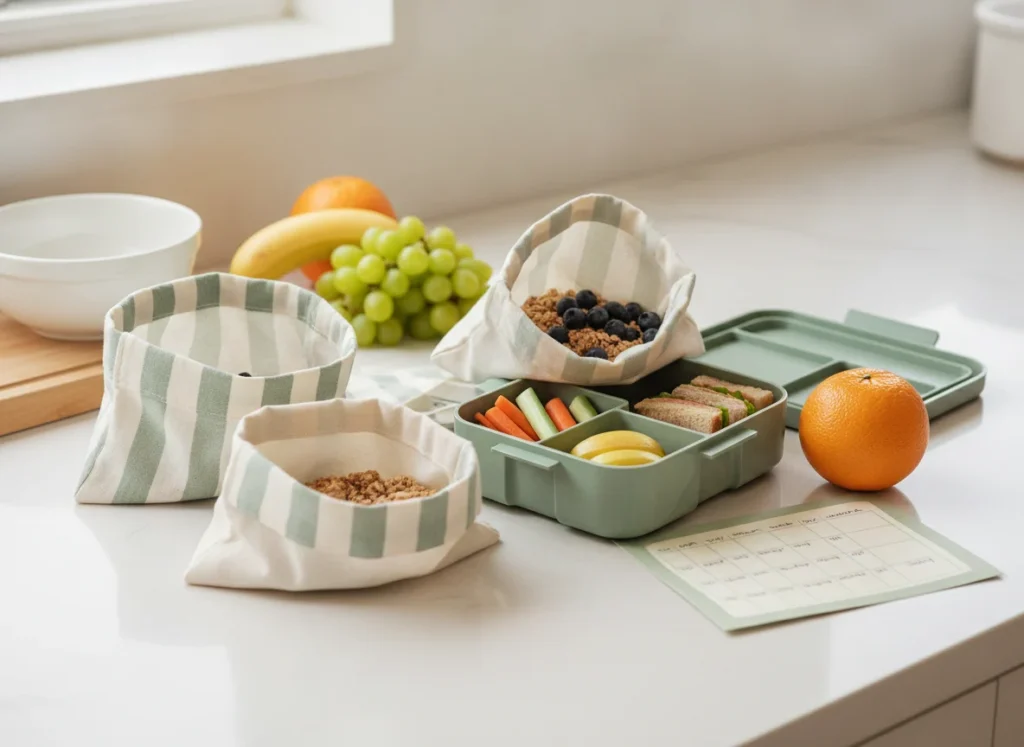
Start with practical lunch ideas, add reusable snack storage and build a simple routine that makes school mornings easier.The guide connects reusable storage with lunch planning, simple portions and a routine that can be repeated throughout the school week.
Start the GuideKeep exploring
Reusable Snack Bag Guides, Reviews & Care Tips
Explore practical guides on materials, sizes, cleaning, freezer prep and choosing reusable snack bags for school and family routines.
Easy School Lunch Ideas
Build a simple weekly routine with practical lunch inspiration for busy mornings.
Explore lunch ideasKids Bento Lunch Boxes
See how compartments and portions can support a more organised school lunch.
Explore bento boxesInsulated Lunch Bags
Choose a carrier with enough room for containers, snacks, a bottle and a cold pack.
Explore lunch bagsMeal Prep Containers
Combine reusable snack storage with containers that support portions and weekly prep.
Explore meal prepQuick care checklist
Keep the Routine Easy to Repeat
- Empty crumbs and leftover food as soon as practical.
- Follow the current care label for hand-washing, machine-washing or dishwasher use.
- Open bags fully and let seams and corners dry before storage.
- Use separate bags when strong flavours or allergens need extra control.
- Check closures, seams and linings regularly and replace damaged items.
- Store clean bags open or loosely folded so trapped moisture can escape.
Frequently Asked Questions
What size reusable snack bag should I choose?
Start with the food you pack most often. Small bags work well for snack portions, medium formats suit fruit or a modest sandwich, and larger bags can support wraps or meal-prep portions. Check the dimensions rather than relying only on labels such as small or large.
Should I choose silicone or fabric?
Silicone can be useful when you want a flexible, wipeable format for moist or mixed foods. Fabric bags are often lighter and convenient for dry snacks or sandwiches. The better choice is the one that matches your food, cleaning routine and the exact product instructions.
How should reusable snack bags be cleaned?
Remove food promptly, wash according to the care label and dry the bag completely before storing it. Pay attention to closures, corners and stitched seams. Do not assume every reusable bag is suitable for a dishwasher or high heat.
Can reusable snack bags go in the freezer?
Only use a bag in the freezer when the manufacturer currently states that the exact product is suitable. Leave room for food to expand, avoid overfilling and check the closure before laying the bag flat.
How many reusable snack bags does a family need?
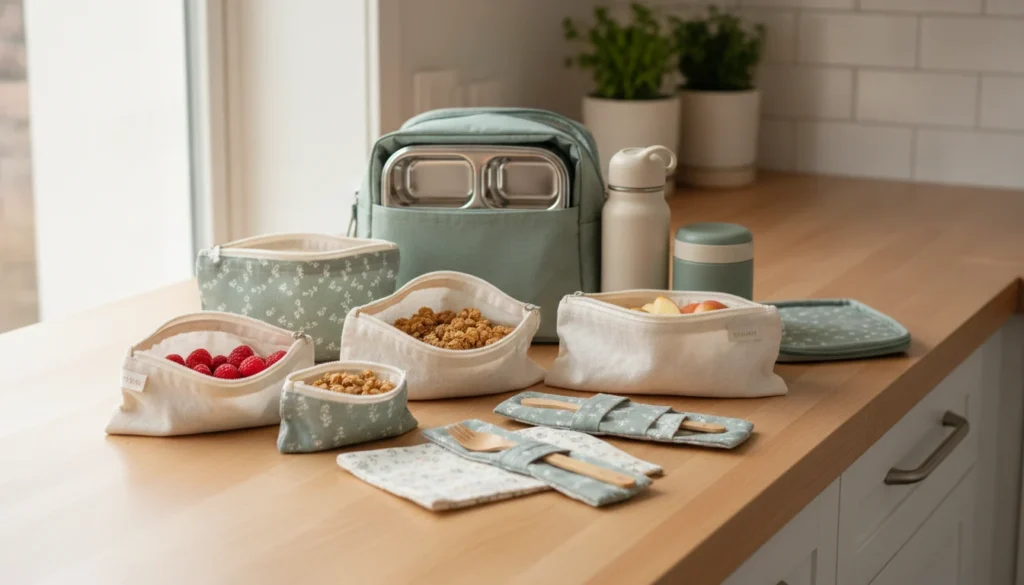
A practical starting set covers the number of lunches packed between wash cycles, plus one or two spares. Many families find a mix of small and medium bags more useful than buying a large set of one size.
Next step